The economy already runs on you.
It just doesn't pay you.
Your identity, your data, your trust create value every day — and almost none of it comes back. A billion people it won't even let in: no way to be recognized, trusted, or paid. The generous economy is the one where that reverses — where trust, permission, and value finally travel with the person, and the worth they create flows back to them. Not charity. The way it should have worked all along.
We don't want a slice of the pie. We're giving it back.
Multiply that across health, finance, and identity and you reach the number below: ~$500B a year currently extracted from individuals. We are not attacking that market. We are redirecting it back to the people it was taken from — and earning 20% on a flow that never existed before. That is the Extractive→Generative shift, made financial.
The line — six principles that separate the two
These are not marketing claims; they are the principles the whole trust society is built on. They are also the exact test the market fails: nearly every player honors one or two and quietly violates the rest.
You hold the root
Your identity is yours to keep, carry, and reclaim — a key you control, not an account on someone's platform. Extraction: the platform is your identity, and it owns the relationship.No one can read you
Operator-cannot-decrypt, by construction — the operator holds only ciphertext, so it cannot read your data, and cannot sell what it can't read. Extraction: they read it, pool it into a graph, and resell the aggregate.Consent is code — and revocable
Permission travels with the data as a cryptographic object and can be withdrawn in an instant. Extraction: consent buried in policy prose; a standing scrape you can't take back.Verify everywhere, issue nowhere
Open, offline-verifiable against one pinned root — so no single party, not even us, becomes the gatekeeper. That is what makes it joinable: partners federate (and interop with EUDI/eIDAS, both ways) without building on someone's toll bridge. Anti-monopoly by design. Extraction: a proprietary silo you're locked into and can't verify without them.Proven real — and no one can take it away
A proof of personhood you hold and carry — so being recognized, and able to travel and transact, never hinges on papers that can be lost, stolen, revoked, or never issued. Over a billion people are locked out right now — trafficked and stripped of their identity, made stateless, or simply never given an ID. This is the proof no government can cancel and no company can hoard. Extraction: an identity a government can revoke or a trafficker can steal — and for a billion people, no ID at all: no border crossed, no account opened, no basic right claimed.You get paid — and never charged
You keep 80% (the positive form) — and you are never charged to be real or to reach your own data (the negative form). Both, said out loud, are what make the claim credible. Extraction: you are the product — and most people never see the bill. Your everyday searches, clicks, and whereabouts quietly earn search engines and data brokers thousands of dollars a year, per person. Your medical records are bought and sold between data companies without your knowledge or consent. The whole economy runs on profiling you and reselling who you are — and you're handed a token, or nothing.Composed by protocol, never by merger: the society federates by signature, so no single party — not even its founders — can seize it. That is why it can be trusted to grow.
The map — who is on which side, and what's at stake
Eight verticals, ~$580B a year — most of it currently extracted from the people who create it. Column width is the value at stake; the stack is who's competing for it. Hover any block for the players and why they land there — and use the toggles to light up the extractive DNA or the sovereign-friendly camp across the whole field at once.
Illustrative order-of-magnitude synthesis of public market figures + eight vertical scans; segments overlap at the edges — a directional picture, not audited totals. The green slice is a sliver in every column except the AI-agent greenfield. That sliver, made the whole, is the opportunity.
Build with
- The open standard — the Spatial Web standard (IEEE 2874); its author defined it, and we built the running implementation.
- Architecture allies — the personal-data-store and self-custody projects: each proves the architecture is real; each lacks our two hardest axes, which is what we bring.
- Existence proofs & components — privacy browsers and platform health apps prove the model scales; a regulated stablecoin rail and open-banking connectors compose under the anchor.
Route around
- Biometric-pooling personhood — the vendors that make you scan an iris or a face into a database they keep, to prove you're human.
- Data-broker graphs — the aggregators that read, pool, and resell your financial and health life across their clients.
- Wolves in sovereignty clothing — the most dangerous, because they wear our language. The custodial "bank for your data" and the loyalty wallet that promise you own and earn from your data, then route it through a wallet they hold; the marketplaces that dress collect-pool-resell in the vocabulary of ownership. Right words, same extraction — just a better costume.
The alliance — one substrate, many surfaces
The weak story is "a few sovereign companies partner." The true, stronger one: one substrate, many surfaces — some ours, some our partners', all identical in shape. Rosalind, our own health flagship, runs on the exact platform we hand to partners — we run our own flagship on the platform we sell. The Telepathy Center has already built on it, and others are onboarding now. That's what makes joining low-risk: a partner gets precisely what we run, on the same foundation Abakus, Generous, and TrustWeave build on.
And it closes a loop no single competitor holds:
Verify → sovereign-hold → settle. Every rival holds one leg; the alliance holds all three — which is exactly why Abakus isn't a nice-to-have: without a settlement rail, 80/10/10 is a slogan.
Each piece is the missing piece of another
| Layer | Piece | What it unlocks |
|---|---|---|
| You are real | RosaProof (in RosaTrust) | sovereign KYC — the personhood root every layer trusts; no state or orb as gatekeeper |
| It's yours | RosaTrust · Rosalind/Rosalink | the running trust engine + the health flagship — the rail, and the template vertical that pays a real person first |
| You get paid | Abakus (on its banking core) | sovereign banking + the settlement / fiat bridge — the person keeps 80%; institutions enter legally |
| Build on it | TrustWeave | the DID/VC SDK — building on the economy becomes a config exercise, not a cryptography project |
| Reach & fund it | Generous | the narrative, the institutional pipeline (Smart Africa · MDBs · NGOs), the capital, the 80/10/10 design |
Bound by the constitution — IEEE 2874: anyone joins by conforming; our running system is the reference implementation everyone conforms against.
The ceiling isn't a product's market share. Because the alliance is the standard + the only running implementation + an institutional channel, its revenue is a thin, principle-safe cut of the value that flows across the rail — compounding as participation creates trusted state.
The working stack — already live
Not a concept deck; the pieces are running today — Rosalind (the health flagship) · Abakus and its Foundation (the sovereign bank + the foundation we built for them) · RosaTrust (the trust engine underneath all of it).
How it pays for itself — without breaking a principle
The honest question about any economy this open is who pays for the road. The answer is not the person crossing it.
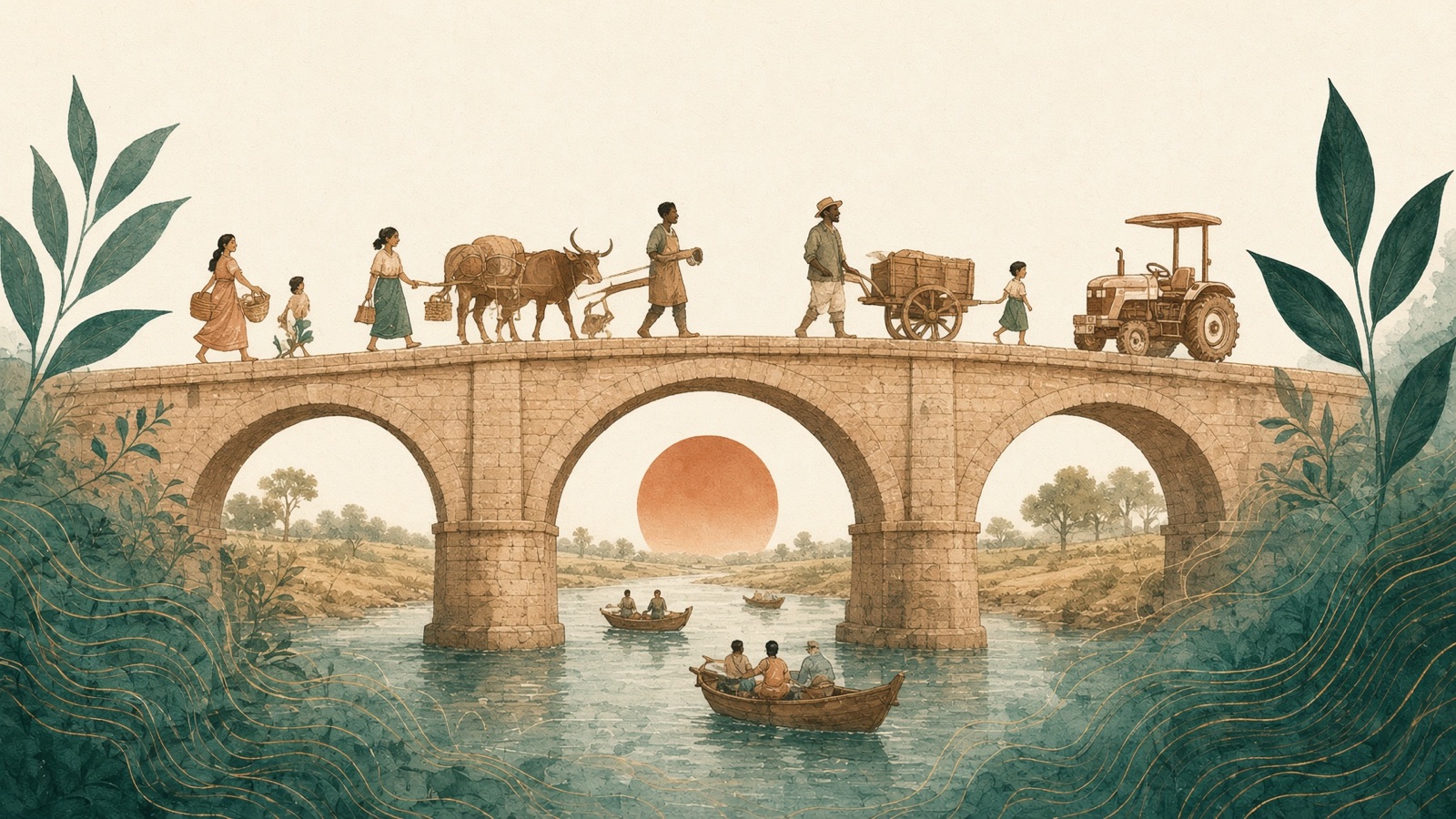
The market map's lesson is blunt: every player either monetizes by extracting data or fails to pay the person. The alliance does neither — because it does not monetize trust, it monetizes the value that trust lets flow. Verification stays free forever: that is the adoption engine and the moat, not the product. Revenue is a thin, principle-safe cut of the economic activity riding on the free rail.
This is why the piece once assumed to be a cost centre is the most valuable asset: RosaTrust is the value-capture layer for the entire economy, not a product any one vertical subsidizes. You don't get rich charging admission to the bridge — you get rich because all the commerce crosses your span, and you take a sliver of it, forever, without ever holding anyone's data or taxing the person.
Why now
Three forces are converging, and each one needs what this alliance has built. AI agents are becoming economic actors — an agent economy with no sovereign, accountable identity layer is a catastrophe waiting to happen, and no one else couples a self-owned root with real personhood. Digital public infrastructure is becoming policy — billions are about to be issued an identity, and whoever sets the pattern sets it for a generation; only ours is sovereign by construction. And the extractive model is out of room — value has concentrated until the people who create it are inputs, not participants, and the correction is exactly the generative economy this stack makes real.
The market has independently converged on our vocabulary in eight verticals at once. That is validation and urgency, not comfort: the words are valuable enough to steal, and someone will occupy the empty quadrant. The only principled position at the top of an otherwise-extractive field is this one — and it is the moment to build it, together.
Method & caveats. Eight parallel vertical scans (SSI wallets, KYC, personal-data stores, loyalty/CDP, health data, open banking, pay-the-user, AI-agent identity), each scoring 8–17 players against a six-principle sovereignty test. Market sizes are illustrative order-of-magnitude syntheses of public figures, not audited; posture splits are directional. A few dead/pivoted statuses and funding figures warrant one confirming citation before external use. Full per-player evidence sits behind each vertical's research.
None of this stands on its own. A generous economy rests on a foundation — a trust society, where you hold your own root, no one can read you, and consent is code. A generous economy without a trust society is a promise that doesn't scale; a trust society without a generous economy is a nicer cage. We built the running system for both.
The Trust Society and the Generous Economy — the foundation, and what it makes possible.